
Introduction — Who This Guide Is For and Why It Matters
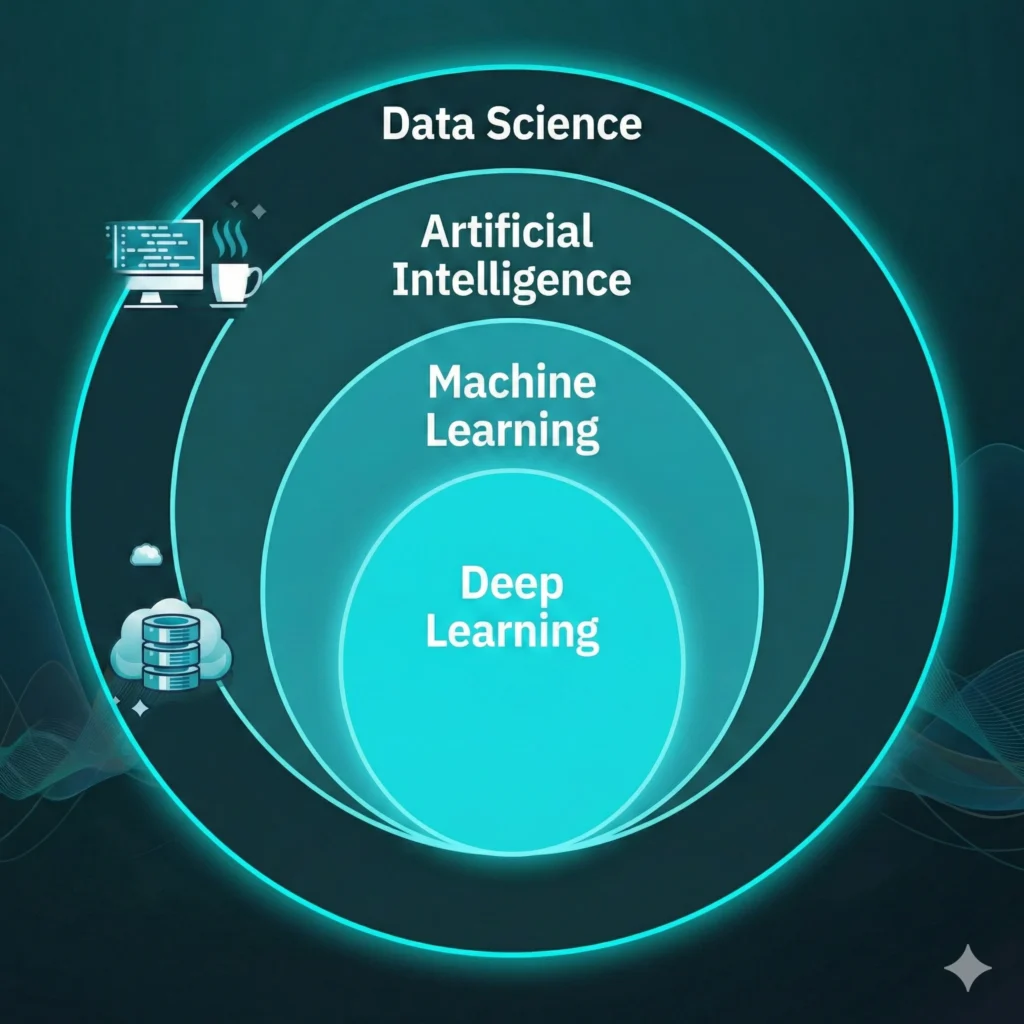
If you’re a student, career switcher, MBA graduate, or early professional exploring Artificial Intelligence and data science, you’ve likely noticed both terms used together — sometimes interchangeably.
This creates confusion:
- Is AI part of data science or the other way around?
- Do I need to learn everything at once?
- What tools should a beginner actually start with?
This blog will:
- Clearly explain how data science and AI are related
- Show how they work together in real-world systems
- Give you a beginner-friendly list of tools and resources that actually matter
No hype. No overload. Just a clean learning path.
How Are Data Science and Artificial Intelligence Related?
At a high level:
👉 Data science provides the foundation for Artificial Intelligence.
Simple Explanation
- Data science collects, cleans, and analyzes data
- Artificial Intelligence uses that data to build systems that think, learn, and decide
Without quality data science, AI systems simply don’t work well.
The Role of Data Science in AI Systems
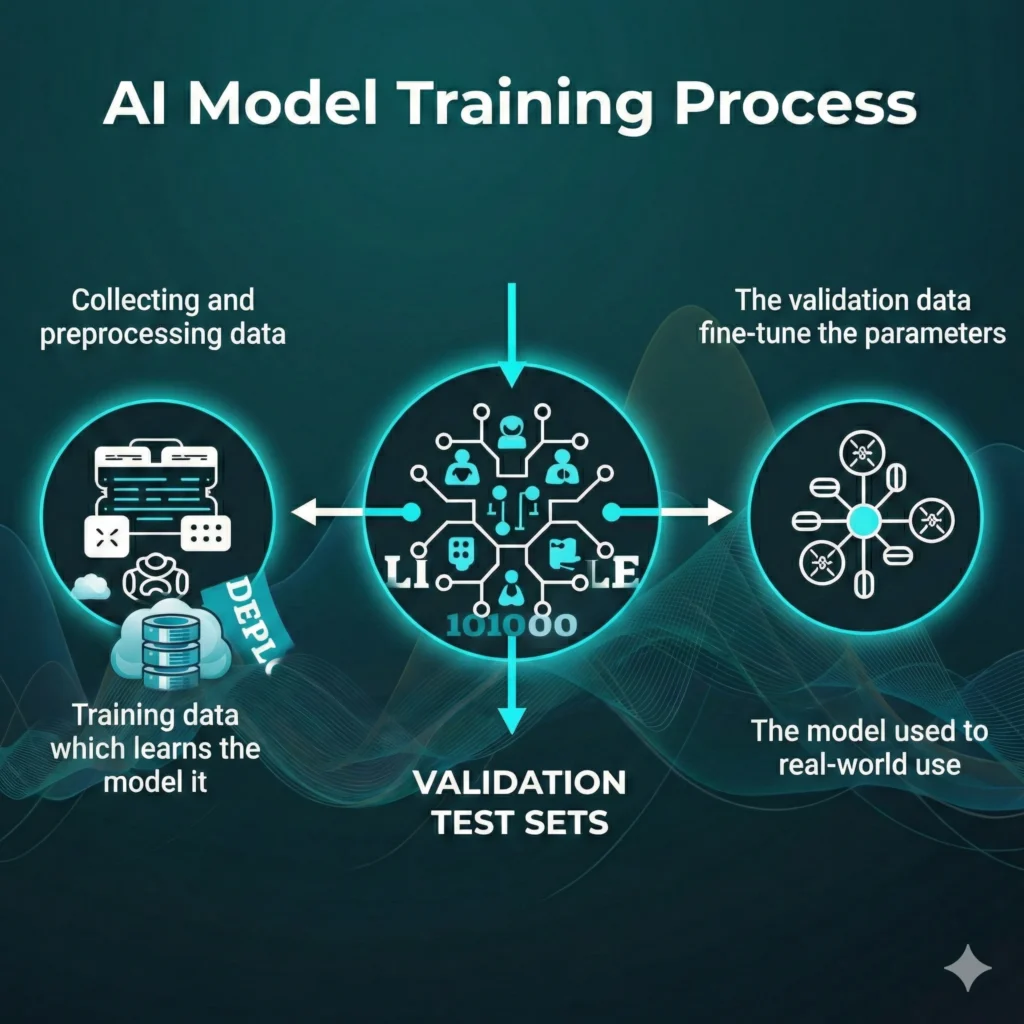
Nearly 80% of AI project time is spent on data-related tasks — not model building.
How Data Science Supports AI
- Data collection from multiple sources
- Data cleaning and preprocessing
- Feature engineering
- Model evaluation and optimization
- Monitoring AI performance over time
Real-World Example
In autonomous vehicles:
- Data science prepares millions of images and sensor readings
- AI models use that data to recognize objects with 95%+ accuracy
Is Artificial Intelligence Bigger Than Data Science?
This is where many beginners get stuck — so let’s simplify.
Think of It Like This
- Data science → Extracts insights from data
- AI → Uses those insights to make decisions automatically
Relationship Breakdown
- Data science = problem-solving with data
- Machine learning = learning patterns from data
- AI = decision-making using learned patterns
👉 AI systems cannot exist without data science, but data science can exist without AI.
Where Data Science Ends and AI Begins
Key Difference
- Data science answers: “What should we know?”
- AI answers: “What should we do next?”
Example
- Data science finds customers likely to churn
- AI automatically triggers personalized retention offers
Tools Beginners Should Use to Learn Data Science and AI
Programming Languages
- Python – Used in over 85% of data science projects
- SQL – Essential for working with databases
Core Python Libraries
- NumPy – Numerical computing
- Pandas – Data manipulation
- Matplotlib & Seaborn – Visualization
- Scikit-learn – Machine learning
AI & Machine Learning Tools for Beginners
Popular Frameworks
- TensorFlow – Industry-grade AI systems
- PyTorch – Research-friendly and beginner-loved
- Keras – Simplifies neural network building
Why These Matter
- Reduce coding complexity by 40–60%
- Allow faster experimentation
- Widely used in real-world AI products
Data Visualization & Analytics Tools
Beginner-Friendly Tools
- Excel – Still used in 90% of businesses
- Power BI / Tableau – Interactive dashboards
- Google Data Studio – Cloud-based reporting
Visualization helps communicate insights — a key data science skill.
Learning Platforms & Resources for Beginners
Online Learning
- MOOCs with hands-on projects
- Guided learning paths
- Interactive notebooks
Practice Platforms
- Kaggle – Real datasets & competitions
- GitHub – Code sharing and version control
Recommended Learning Mix
| Resource Type | Purpose |
| Courses | Concept clarity |
| Practice datasets | Skill building |
| Projects | Portfolio creation |
| Communities | Doubt-solving & networking |
A Beginner-Friendly Learning Roadmap
Step-by-Step Path
- Learn Python & SQL
- Understand statistics basics
- Practice data analysis
- Learn machine learning fundamentals
- Explore AI concepts
- Build real-world projects
👉 Most learners become confident within 6–8 months with consistent practice.
Common Beginner Mistakes to Avoid
- Jumping directly into AI without data basics
- Ignoring statistics
- Learning tools without building projects
- Comparing progress with experts
Remember — AI mastery is a marathon, not a sprint.
Frequently Asked Questions (FAQs)
Q1. Do I need a math background for AI and data science?
Basic math is enough initially. Advanced concepts come later.
Q2. Can non-tech students learn AI and data science?
Yes. Over 45% of successful learners come from non-technical backgrounds.
Q3. Which tool should I learn first?
Start with Python, then move to data analysis and machine learning.
Q4. How long does it take to learn AI?
Foundations take 6–9 months; mastery is continuous.
Final Thoughts
Data science and Artificial Intelligence are deeply connected — one prepares the data, the other turns it into action.
For beginners, the key is clarity, patience, and practice. With the right tools and resources, learning AI and data science becomes structured, achievable, and exciting.
Author
Nachiket Dixit
Data Scientist | Machine Learning Engineer | Analytics Mentor
Nachiket Dixit works at the intersection of data science and artificial intelligence, helping businesses and learners turn data into intelligent, real-world solutions through practical, hands-on approaches.