
If you’re a student who has just completed 12th grade and you’re thinking about how to become a data scientist, you’re already ahead of many others.
You’re probably asking:
- What should I study?
- Is coding compulsory?
- What qualification is required?
- What salary can I expect?
- Is data science even a good career in 2026?
The confusion is real.
This blog gives you a clear, structured roadmap to become a successful data scientist after 12th — without unrealistic promises and without vague advice.
What Should I Do After 12th to Become a Data Scientist?
Let’s be practical. A data scientist is someone who solves business problems using data, statistics, and machine learning. That requires structured preparation.
Choose the Right Stream
If you are still selecting subjects:
✔ PCM (Physics, Chemistry, Mathematics)
✔ Commerce with Mathematics
Mathematics is non-negotiable. Strong data scientists regularly works with probability, statistics, and linear algebra.
Choose the Right Degree
Here are the most suitable degrees:
| Degree | Duration | Why It Helps |
| B.Tech in Computer Science | 4 Years | Strong programming + AI foundation |
| BSc in Data Science | 3 Years | Direct specialization |
| BCA | 3 Years | Software & coding base |
| BSc Statistics/Mathematics | 3 Years | Analytical strength |
Over 70% of data scientist’s roles require a technical background. But a degree alone is not enough.
What is the Qualification for a data scientist?
Minimum qualification:
- Bachelor’s degree in a technical field
- Programming knowledge (Python preferred)
- Statistics fundamentals
Preferred qualification:
- Master’s degree (MSc Data Science / MBA Analytics)
- Internship experience
- Strong project portfolio
Here’s the reality: Companies hire data scientists for problem-solving ability — not just degrees.
What Course to Take to Become a Data Scientist?
There are two major paths.
Traditional Academic Route
- Graduated in a technical field
- Do certifications
- Complete internships
- Apply for data scientist’s roles
Skill-Based Fast Track Route (Alternate Section)
If you want to accelerate:
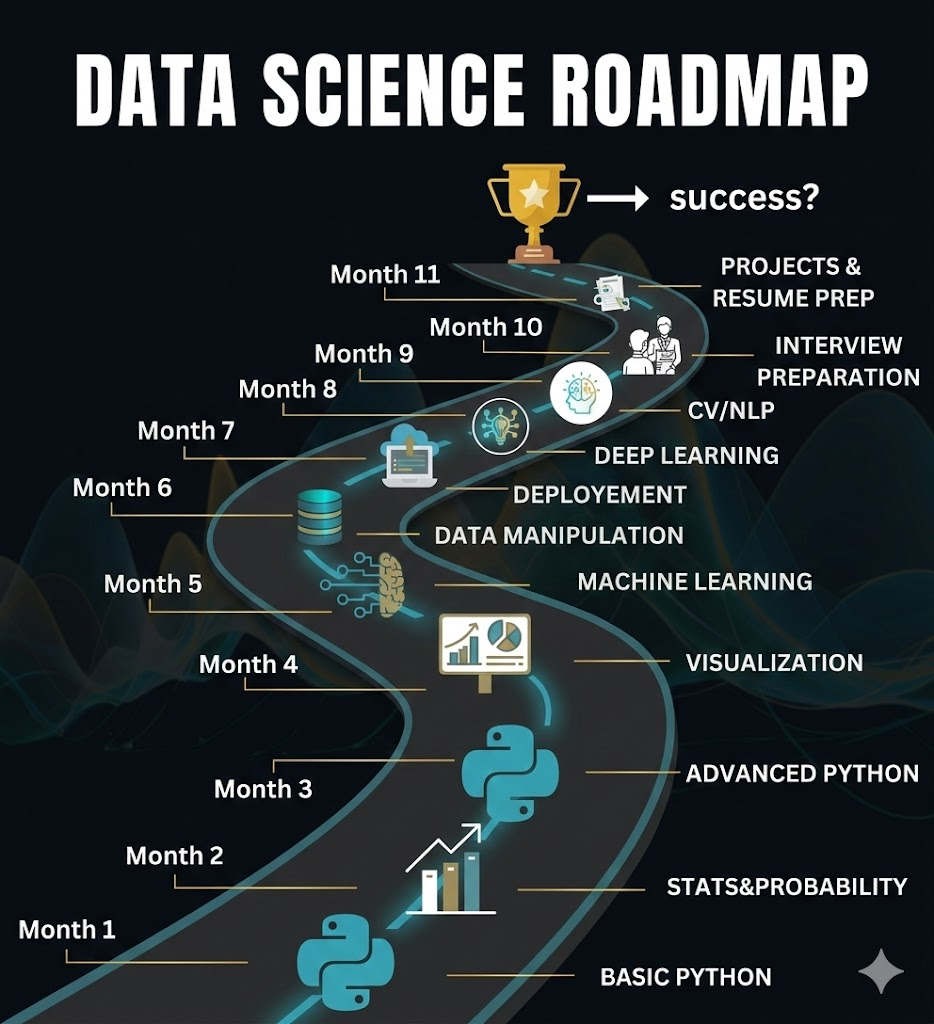
- Learn Python (3–4 months)
- Learn SQL (1 month)
- Master Statistics (2–3 months)
- Learn Machine Learning (4–6 months)
- Build 5–8 real-world projects
- Do internships
Structured mentorship platforms like TheDataBrew help aspiring data scientist candidates follow a guided, industry-relevant roadmap instead of random tutorials.
Core Skills Required to Become a Data Scientist
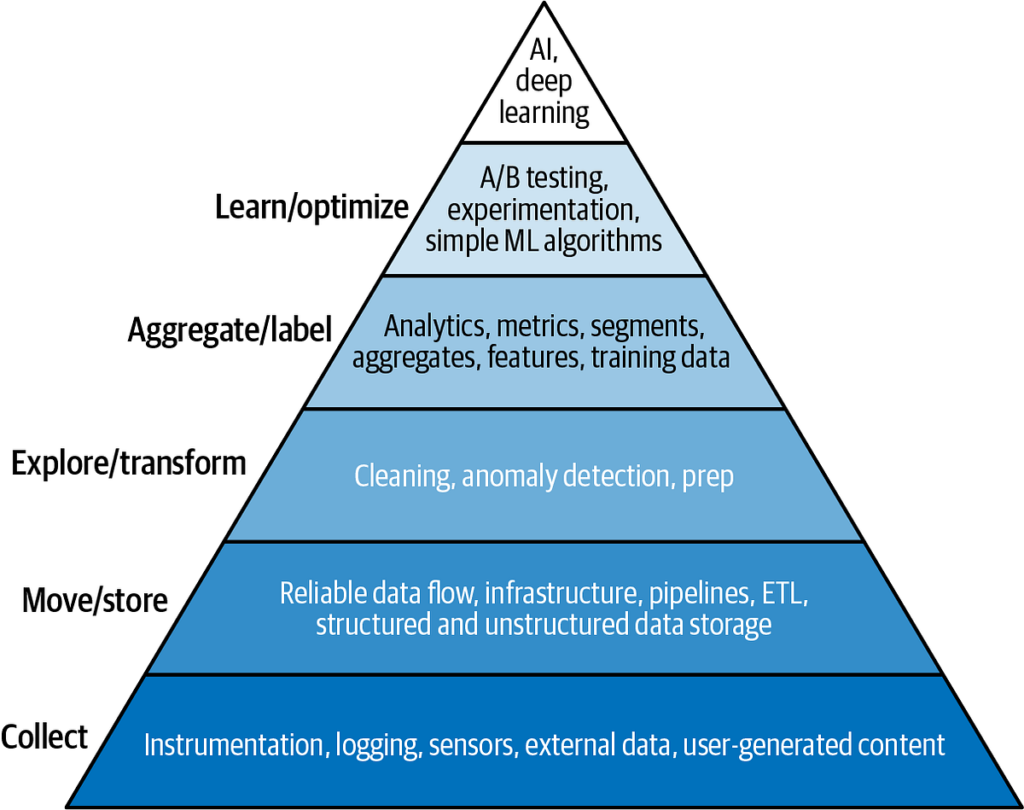
A job-ready data scientist needs:
Foundation Level
- Mathematics
- Statistics
- Probability
Technical Level
- Python
- SQL
- Data Cleaning
Advanced Level
- Machine Learning
- Deep Learning
- Data Visualization (Power BI/Tableau)
Python dominates over 80% of data scientist job postings in India.
Is Python or R Better for Data Science?
Short answer: Start with Python.
| Python | R |
| Easy for beginners | Strong in academia |
| Used in 80%+ industry jobs | Mostly statistical research |
| Better for AI & ML | Great for statistical modeling |
If your goal is industry-ready data scientist roles, Python is the safer starting point.
What is the Salary of a data scientist after 12th?
Let’s clarify something first.
You don’t earn as a data scientist right after 12th. You earn after building skills.
Here’s salary data in India:
| Experience | Average Salary |
| Fresher | ₹6–10 LPA |
| 2–4 Years | ₹12–18 LPA |
| 5+ Years | ₹25–40 LPA |
Globally, the average data scientist salary ranges between $95,000–$130,000 annually.
Salary grows with:
- Skill depth
- Real-world projects
- Communication ability
- Business understanding
Step-by-Step Roadmap to Become a Data Scientist After 12th
Here’s your simplified action plan:
- Choose Mathematics in 12th
- Pursue technical graduation
- Learn Python & SQL
- Study Statistics deeply
- Learn Machine Learning
- Build a strong portfolio
- Complete internships
- Apply for entry-level data scientist roles
If followed seriously for 3–4 years, you can become a competitive data scientist candidate.
Common Mistakes Students Make
Let’s be direct.
❌ Choosing data science only for salary
❌ Ignoring mathematics
❌ Watching tutorials without projects
❌ Avoiding internships
❌ Expecting quick success
A successful data scientist builds, experiments, and learns from failure.
Why Learn Data Science with TheDataBrew?
At TheDataBrew, we focus on:
- Real-world case studies
- Guided mentorship
- Portfolio building
- Interview preparation
- Industry exposure
Instead of scattered learning, you follow a structured path toward becoming a confident data scientist.
If you’re serious about building a future-proof career, structured learning accelerates results.
Frequently Asked Questions (FAQ)
Q.1 Can I become a data scientist without math?
No. Mathematics is foundational.
Q.2 How many years does it take?
3–4 years with consistent effort.
Q.3 Can commerce students become data scientists?
Yes, if they study mathematics and coding.
Q.4 Is coding mandatory?
Yes. A data scientist must know Python or R.
Q.5 Is data science a good career in 2026?
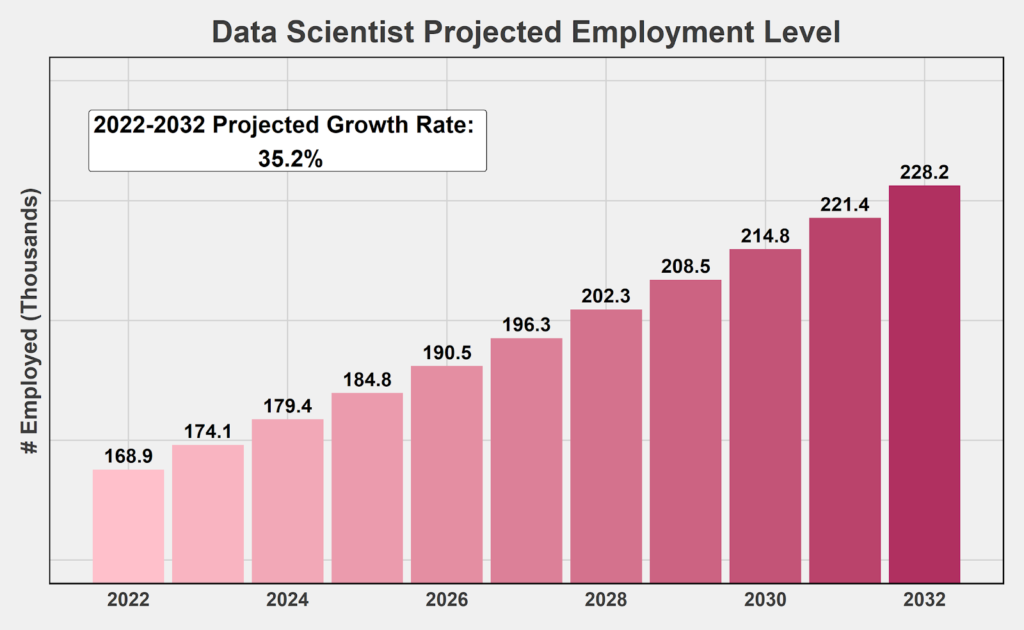
Yes. Demand for data scientist roles continues to grow across industries.
Final Thoughts
Becoming a data scientist after 12th is realistic — but not effortless.
It requires:
- Discipline
- Logical thinking
- Coding practice
- Project execution
If you start early and stay consistent, you can build one of the most in-demand careers of this decade.
Ready to begin your journey to become a data scientist?
Join TheDataBrew today and learn through:
✔ Industry projects
✔ Structured roadmap
✔ Career mentorship
✔ Interview preparation
Start building your future now.
Author
Nachiket Dixit
Data Scientist | Machine Learning Engineer | Analytics Mentor
Nachiket Dixit is a data science and artificial intelligence professional with hands-on experience in building real-world machine learning solutions and mentoring aspiring data professionals. He specializes in transforming complex data problems into actionable business insights.