
Introduction — Why Data Science Matters to You
If you’re a student, working professional, business owner, or someone curious about Artificial Intelligence and data-driven careers, you’ve probably heard the term Data Science everywhere — in job posts, LinkedIn feeds, and tech discussions.
But let’s be honest — most people feel confused.
Is data science the same as data analytics?
Is machine learning just another name for AI?
And most importantly — what problem does data science actually solve?
This blog breaks it all down in simple words, with real-world examples, so by the end, you’ll clearly understand:
- What data science really is
- Why it exists
- And how it’s different from data analytics and machine learning
No jargon. No over-complication. Just clarity.
What Is Data Science?
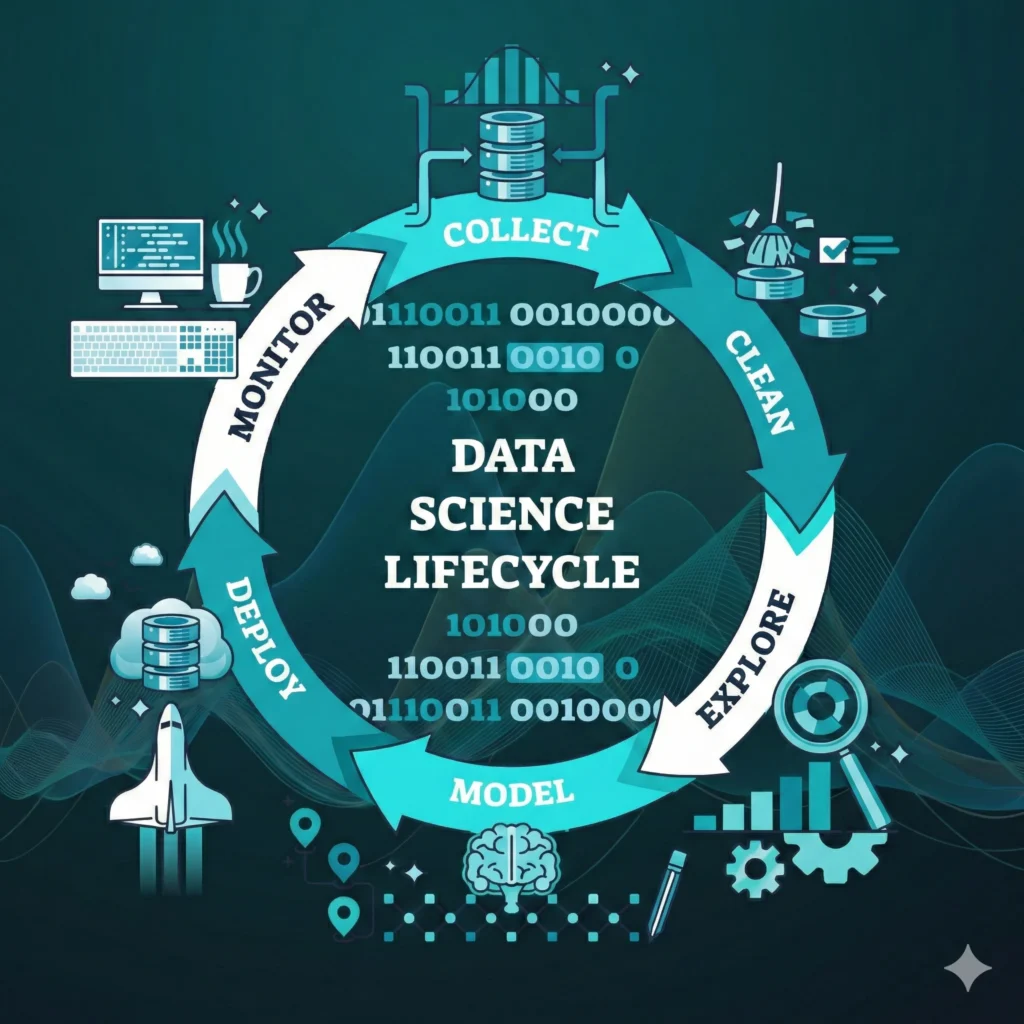
Data science is the field that uses data, statistics, programming, and artificial intelligence to extract meaningful insights from raw data and help in better decision-making.
In simple terms:
Data science turns raw data into useful knowledge.
It combines:
- Mathematics & statistics
- Programming (Python, R, SQL)
- Machine learning algorithms
- Domain knowledge
- Data visualization
Simple Example
Netflix uses data science to:
- Analyze what you watch
- Predict what you’ll like next
- Recommend shows with over 80% accuracy, reducing user churn significantly
That’s data science in action.
The Purpose of Data Science
The main purpose of data science is to solve real-world problems using data.
Key Objectives of Data Science
- Identify patterns and trends
- Predict future outcomes
- Optimize business processes
- Automate decision-making
- Reduce costs and risks
Quantifiable Impact
- Companies using data science are 23× more likely to acquire customers
- Data-driven organizations improve operational efficiency by up to 60%
- Predictive analytics reduces business losses by 15–25%
Core Components of Data Science
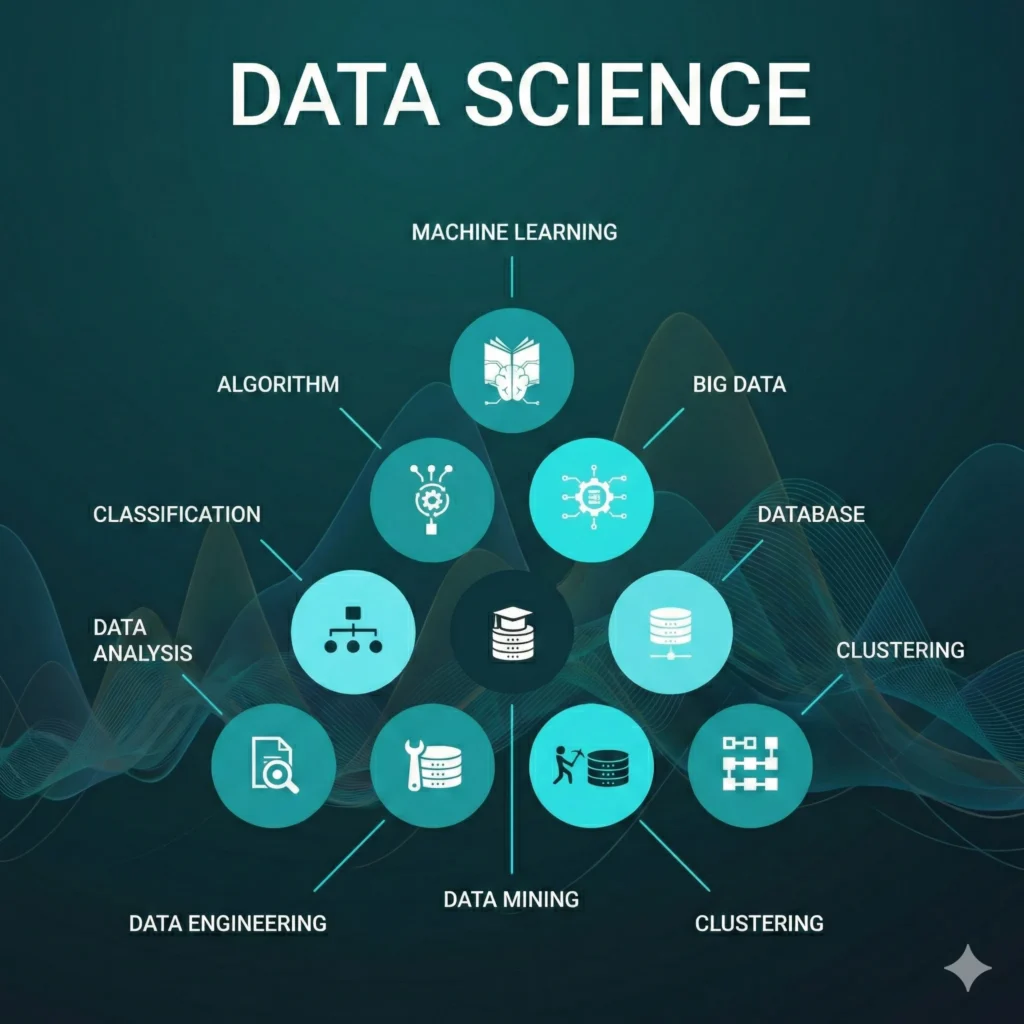
Bullet Breakdown
- Data Collection – From databases, APIs, sensors, logs
- Data Cleaning – Removing errors (takes ~70% of project time)
- Exploratory Data Analysis (EDA) – Understanding patterns
- Model Building – Using machine learning algorithms
- Evaluation & Deployment – Making models usable in real systems
What Is Data Analytics?
Data analytics focuses on analyzing historical data to understand:
- What happened
- Why it happened
It is more descriptive and diagnostic.
Example
A retail company uses data analytics to:
- Analyze last year’s sales
- Identify best-selling products
- Improve inventory planning
Common Tools
- Excel
- SQL
- Power BI / Tableau
- Basic Python
What Is Machine Learning?
Machine learning is a subset of data science that allows systems to learn from data and improve automatically without being explicitly programmed.
Example
- Gmail spam filter improves accuracy over time
- Fraud detection systems identify suspicious transactions in milliseconds
Key Types
- Supervised learning
- Unsupervised learning
- Reinforcement learning
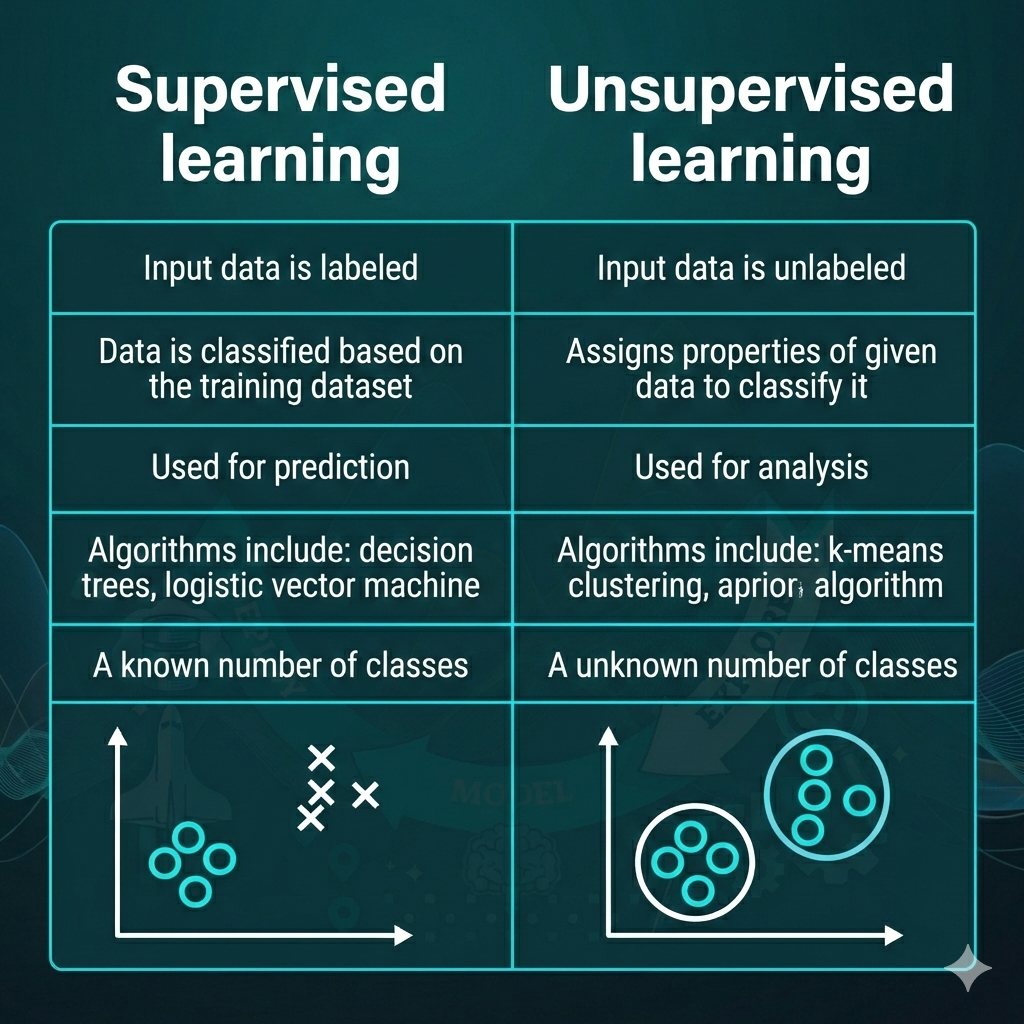
Data Science vs Data Analytics vs Machine Learning
Comparison Table
| Aspect | Data Science | Data Analytics | Machine Learning |
| Focus | End-to-end problem solving | Past data insights | Prediction & automation |
| Data Type | Structured & unstructured | Mostly structured | Large datasets |
| Output | Predictions, insights, models | Reports & dashboards | Trained models |
| Complexity | High | Medium | High |
| Business Impact | Strategic & tactical | Tactical | Strategic |
How Data Science Uses Data Analytics and Machine Learning
Think of it This Way
- Data analytics → Understand the past
- Machine learning → Predict the future
- Data science → Uses both to solve problems
Real-World Flow
- Analytics finds patterns
- Machine learning builds predictions
- Data science integrates everything into business decisions
Skills Required for Data Science
Essential Skills
- Python / R
- SQL
- Statistics & probability
- Machine learning
- Data visualization
- Business understanding
Why Data Science Is a Future-Proof Career
- Global data volume grows by 25% annually
- Demand for data scientists is increasing 35% year-on-year
- Average salary growth of 20–30% in tech-driven economies
Data science sits at the heart of AI, automation, and innovation.
Frequently Asked Questions (FAQs)
Q1. Is data science hard to learn?
Not if you learn step-by-step. With structured learning, most beginners become job-ready in 6–9 months.
Q2. Can I learn data science without coding?
Basic coding is essential. However, modern tools reduce complexity significantly.
Q3. Is data science better than data analytics?
They serve different purposes. Data science is broader and more advanced.
Q4. Does data science include Artificial Intelligence?
Yes. AI and machine learning are integral parts of data science.
Final Thoughts
Data science is not just a buzzword — it’s the engine behind modern decision-making.
Understanding how it differs from data analytics and machine learning gives you clarity, confidence, and direction — whether you’re learning, hiring, or building products.
Author
Nachiket Dixit
Data Scientist | Machine Learning Engineer | Analytics Mentor
Nachiket Dixit is a data science and artificial intelligence professional with hands-on experience in building real-world machine learning solutions and mentoring aspiring data professionals. He specializes in transforming complex data problems into actionable business insights.